The Liberal Identity Crisis Nobody Wants to Admit

Canadians are once again being asked to believe in a political reset.
A new face.
A new tone.
A new managerial class promising competence after years of visible national decline.
And astonishingly, millions of Canadians seemed eager to believe it almost immediately.
When Mark Carney emerged as the new political saviour, the speed of the public transformation was remarkable to watch in real time. A man many Canadians barely knew weeks earlier was suddenly treated as though stability itself had arrived at Ottawa’s doorstep.
The media presentation was nearly flawless.
Calm.
Measured.
Intelligent.
Global.
Responsible.
The “adult in the room.”
And after years of chaos, scandals, inflation, housing collapse, institutional distrust, and growing public exhaustion, many Canadians appeared emotionally desperate to believe that competence had finally returned to government.
There was only one problem:
The branding changed far faster than the country itself.
Now, well over a year later, ordinary Canadians are still asking the same questions:
- Why is housing still becoming increasingly unattainable?
- Why does infrastructure still feel overwhelmed?
- Why does affordability continue deteriorating?
- Why does national cohesion feel weaker than ever?
- Why does the federal government still appear ideologically disconnected from the material reality of ordinary people?
Because despite the polished presentation, many Canadians are beginning to suspect that Carney was never truly a departure from the existing system.
He was a rebrand of it.
The Strange Psychology of Modern Tribal Politics
Part of what made Carney’s ascent possible was not merely support for him.
It was fear and rejection of Pierre Poilievre.
And this is where modern Canadian politics starts becoming psychologically fascinating.
A huge number of Canadians appeared willing to place enormous trust in a relatively unknown political figure largely because he was not Conservative.
Not because they deeply understood his policies.
Not because they had carefully examined his record.
Not because they had seen evidence of transformative leadership.
But because many had already emotionally categorized Poilievre as unacceptable.
And once tribal psychology takes hold, something strange happens:
People stop evaluating politicians comparatively and begin evaluating them morally.
One side becomes “the good people.”
The other becomes “the dangerous people.”
At that point, almost anything becomes justifiable.
Even embracing a political figure they knew virtually nothing about weeks earlier.
The Irony Nobody Seems Willing to Acknowledge
What makes this even more remarkable is the contradiction at the heart of it all.
Many critics of Poilievre claimed they disliked him because:
- he was too confrontational,
- too divisive,
- too critical,
- too aggressive toward opponents,
- too willing to attack institutions and political figures.
And yet many of those same people then immediately engaged in exactly the same behaviour themselves.
Relentless mockery.
Public pile-ons.
Moral grandstanding.
Dismissiveness toward dissenting opinions.
Caricaturing supporters as unintelligent or dangerous.
The very behaviour they claimed to oppose suddenly became acceptable because it was directed at the “correct” target.
That is textbook tribalism.
And modern politics increasingly runs on it.
The Cult of Managerial Competence
One of the strangest developments in modern politics is how easily competence can now be simulated aesthetically.
A calm speaking cadence.
Technical economic language.
Global banking credentials.
Controlled media appearances.
The posture of seriousness.
For many people, this alone has become psychologically interchangeable with actual results.
But competence is not the same thing as measurable improvement.
And over a year into the Carney era, Canadians are still waiting for meaningful evidence that the country has fundamentally changed direction.
The deeper frustration many people feel is difficult to articulate because it is not purely political.
It is psychological.
Canadians increasingly feel governed by a professional managerial class that understands optics, branding, and institutional language far better than it understands the lived experience of ordinary citizens.
A class that speaks endlessly about:
- frameworks,
- transitions,
- sustainability,
- stakeholder alignment,
- economic modernization,
- and social outcomes,
while younger Canadians quietly abandon the idea of home ownership entirely.
Which Raises an Increasingly Uncomfortable Question
If Mark Carney truly represents a major course correction for Canada…
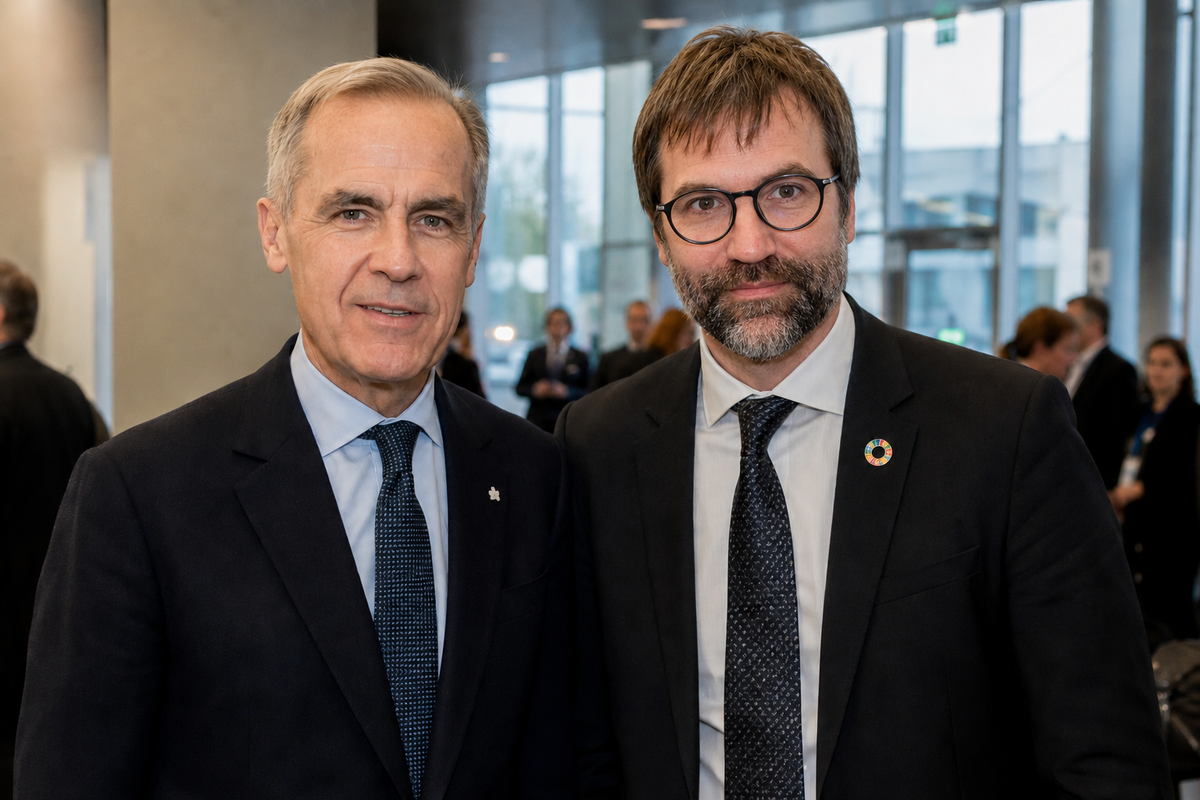
Why does it still feel like Steven Guilbeault is steering the ideological direction of the government?
This is where the recent Toronto Sun editorial accidentally touches on something far larger than partisan politics.
Because the issue is not merely Guilbeault himself.
The issue is that Canadians increasingly sense that the same activist-managerial ideology that defined the later Trudeau years never actually left.
It simply changed spokesmen.
Guilbeault Says the Quiet Part Out Loud
What makes Guilbeault politically useful is that he tends to communicate the government’s underlying worldview more openly than others are comfortable doing.
He represents a style of governance that increasingly views:
- industrial growth with suspicion,
- energy independence as morally compromised,
- consumption as environmentally problematic,
- and economic sacrifice as a kind of civic virtue.
To many ordinary Canadians, this worldview feels profoundly detached from reality.
Especially in a country like Canada:
- rich in natural resources,
- geographically enormous,
- climate challenged,
- infrastructure dependent,
- and heavily reliant on affordable energy for basic economic survival.
And yet Guilbeault continues to project enormous influence over the ideological direction of federal policy.
Which creates a contradiction Canadians are increasingly noticing:
If Carney truly represents pragmatism and economic realism, why do so many policies still feel driven by activist ideology?
Why does it still feel like the same people are pulling the levers behind the curtain?
The Illusion of Internal Conflict
What Canadians may actually be witnessing is not a struggle between two opposing visions of government.
It may simply be two different communication styles serving the exact same system.
Guilbeault represents the overt ideological wing:
- activist language,
- moral urgency,
- environmental absolutism,
- open skepticism toward traditional growth models.
Carney represents the polished technocratic wing:
- smoother messaging,
- financial language,
- managerial reassurance,
- global institutional credibility.
But both may ultimately share the same underlying assumption:
That society should increasingly be managed from the top down by interconnected political, financial, bureaucratic, and technocratic institutions insulated from meaningful democratic resistance.
One simply communicates the ideology more elegantly.
Canadians Are Growing Tired of Being Managed
There is a growing exhaustion in the country that transcends left and right.
People feel overregulated.
Overtaxed.
Overmanaged.
Overmonitored.
Economically squeezed from every angle while being constantly lectured about sacrifice, sustainability, and social responsibility by people who appear largely insulated from the consequences themselves.
And perhaps most dangerously, many Canadians are beginning to lose faith not merely in politicians, but in institutions altogether.
That is what happens when governments become too obsessed with perception management.
When branding replaces accountability.
When polished messaging replaces measurable improvement.
When citizens are told repeatedly that things are improving while their own lived experience tells them the opposite.
The Bigger Risk for Canada
The greatest danger may not be Mark Carney or Steven Guilbeault individually.
It may be the growing realization that Canada’s political class increasingly functions as a closed managerial ecosystem that rotates personalities without meaningfully changing direction.
A system where:
- media narratives manufacture legitimacy,
- institutional approval substitutes for democratic trust,
- and public frustration is managed through rebranding exercises rather than structural reform.
That is why the question raised by the Toronto Sun matters more than it initially appears.
Not because Canadians are deeply concerned about internal Liberal power dynamics.
But because many are beginning to suspect that regardless of who appears at the podium, the same ideological machinery continues operating underneath.
One man simply wears the suit better.